


 By
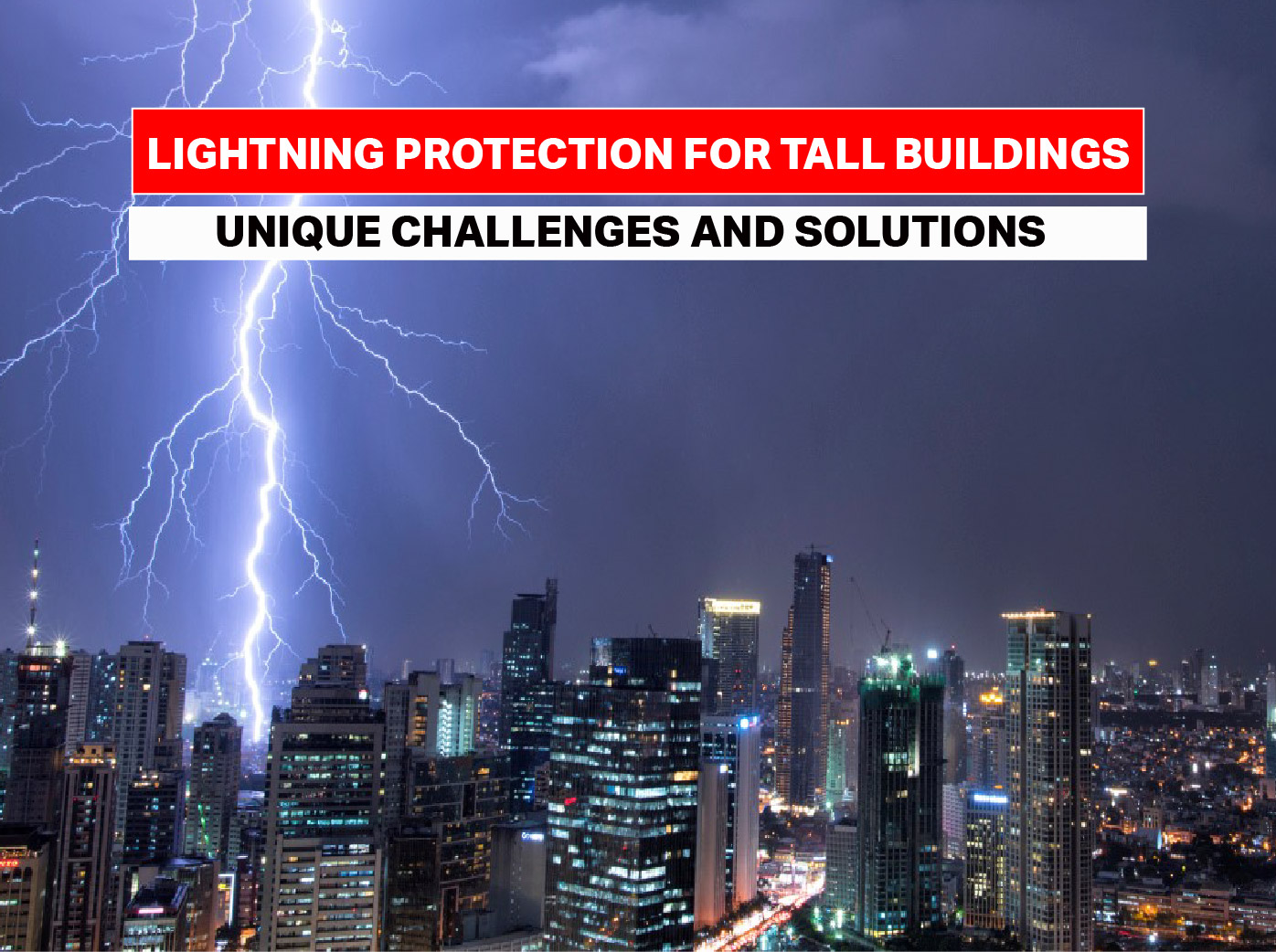
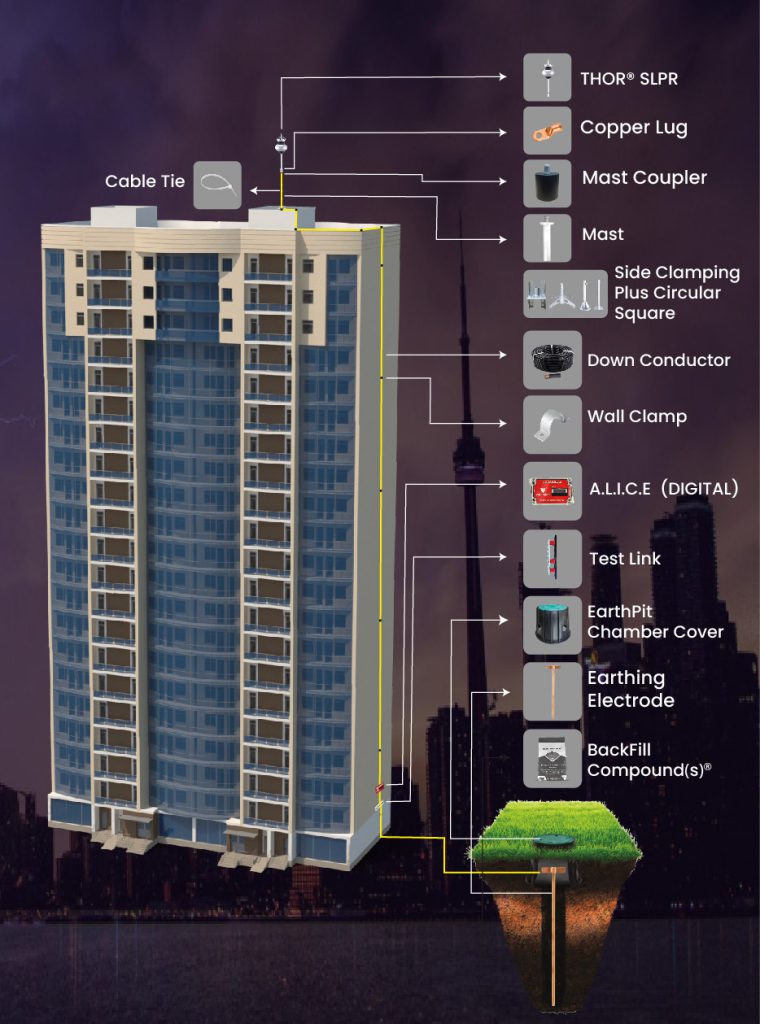
Tall buildings are protected from lightning by giving the strike a deliberate, low-impedance path to earth instead of letting it find its own. That path has three parts: an air termination network on the roof and upper edges to intercept the strike, down conductors distributed around the structure to carry the current down, and an earth termination system to disperse it into the ground. On a high-rise, two more things are added that a low building does not need — equipotential bonding repeated up the height of the structure, and air termination on the upper sides, because above roughly 60 m lightning starts striking the flanks of a building rather than its top.
Below is how each part works, what changes as a building gets taller, and what a compliant high-rise system actually contains.
Do skyscrapers get struck by lightning?
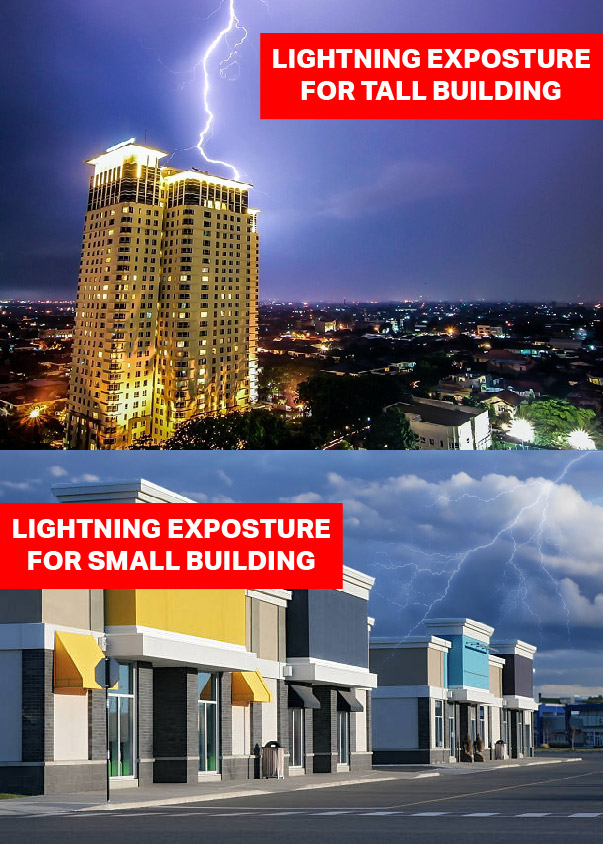
Routinely. A tall structure shortens the distance the downward leader has to travel, so it intercepts strikes that would otherwise have reached the ground some distance away. Very tall structures do something else as well: they can initiate upward lightning from the roof or the mast, which is why instrumented towers record far more events than the surrounding terrain.
None of this is a problem in itself. A properly protected skyscraper is struck, conducts the current to earth, and the occupants notice nothing. The damage cases are the buildings where the current had to improvise — through lift guides, through reinforcement, through a data cable — because no controlled path was provided. If you want the physics of why height matters, we cover it separately in does lightning always strike the tallest object?
What makes a tall building different
- Side flashes. On structures taller than about 60 m, strikes to the upper sides become a real risk, not a theoretical one. IEC 62305-3 accordingly expects air termination on the upper portion of tall structures, not just the roof. A roof-only design on a 40-storey tower leaves the top floors exposed.
- Current has further to travel. A longer down-conductor path means a larger voltage difference between the conductor and everything else inside the building during a strike. That is what drives the bonding requirement below.
- Services run the full height. Lift shafts, risers, BMS cabling, water pipes and busbars all run vertically alongside the down conductors and will happily carry part of the current if they are not bonded.
- Access is hard. A rooftop air terminal at 150 m is not something anyone inspects casually. Design for maintainability or it will not be maintained.
- Facades complicate interception. Curtain walling, glazing, curved crowns and architectural spires all change where a strike will attach — and glass gives you nothing to bond to.
The five elements of a high-rise lightning protection system
| Element | Job | What it looks like on a high-rise |
|---|---|---|
| Air termination | Intercept the strike at a chosen point | Rods, mesh or catenary on the roof, plus terminations on the upper sides above ~60 m; ESE terminals where a single interception point suits the architecture |
| Down conductors | Carry current to earth on a controlled path | Several routes distributed around the perimeter, spacing set by protection class; structural steel or welded rebar is commonly used as a natural down conductor |
| Ring conductors | Share current between down conductors | Horizontal loops at intervals up the height, so no single conductor carries the whole strike |
| Equipotential bonding | Stop side flashes to internal services | Bonding bars at ground level and repeated up the building, tying in risers, lifts, pipework, cable armour and earthing |
| Earth termination | Disperse the current into the soil | Usually a Type B ring or foundation earth electrode around the structure, supplemented with driven electrodes where soil resistivity is high |
Air termination: the roof is not enough
The air termination network is positioned using one of the standard methods — rolling sphere, mesh, or protection angle — chosen against the building’s protection level. On a tall tower the rolling sphere method usually governs, because it is the method that correctly shows the upper corners and edges as the exposed points. Corners, parapets, plant rooms, aerials, window-cleaning rails and crown features all need to be inside the protected volume or bonded into it.
Ashlok supplies both approaches: conventional Franklin rod and mesh systems for straightforward roofs, and ESE air terminals where a single mast covering a wide, architecturally sensitive roof is the better answer. Which is appropriate depends on the structure, not on preference — see types of lightning rods and the ESE lightning arrester guide.
Down conductors and the case for using the structure
Down conductors must be distributed around the building so the current divides between several paths. The permitted spacing tightens as the protection class gets stricter, and the number of routes on a large footprint is set by perimeter, not by convenience.
On most modern high-rises the structural steel frame or the welded reinforcement in the concrete columns is used as a natural down conductor. This is generally better than external tapes: the paths are numerous, inherently well distributed, protected from weather and vandalism, and they cannot be removed during a facade refurbishment. The condition is electrical continuity — the reinforcement has to be bonded and proven continuous during construction, which means it is a decision taken at structural design stage, not at handover. Retrofitting continuity into a finished building is not practical, which is why late lightning-protection design on a tower usually ends in external conductors.
Material matters at the terminations: copper and copper-bonded conductors are standard, and aluminium must never be taken into the soil or connected directly to copper below ground. More on lightning conductor materials here. Joints in the buried section are best made by exothermic welding, which leaves no mechanical interface to loosen.
Bonding: the part that actually protects the people inside
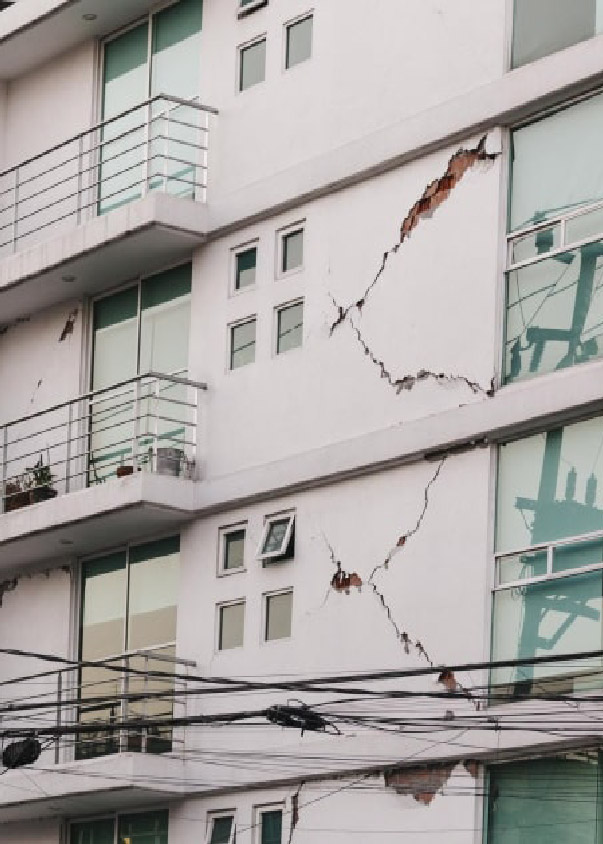
When tens of kiloamps travel down a conductor, the conductor rises to a high potential relative to everything around it. If a metal riser, a lift guide rail or a cable tray runs close by at a lower potential, the current jumps across — a side flash — and that spark is what starts fires and destroys equipment.
The fix is equipotential bonding: tie all the metalwork and all the incoming services to the same reference so nothing is left floating. On a tall building this cannot be done once at the bottom. Bonding bars are provided at ground level and repeated at intervals up the height, and every vertical metallic service is tied in at each level. This is the single most frequently under-built part of Indian high-rise lightning protection, and it is invisible once the shafts are closed up.
Earthing for a high-rise
A tall building normally uses a ring earth electrode around the foundation, or a foundation earth electrode cast into the substructure, so that every down conductor lands on a common, low-impedance earth. Isolated earth pits at the base of each down conductor are the weaker arrangement — they can be at very different potentials during a strike.
Where soil resistivity is high, the ring is supplemented with driven electrodes and a low-resistivity backfill. Ashlok’s maintenance-free earthing electrodes, copper bonded rods and backfill compound are the usual combination. Whatever is installed must remain testable: fit an earth pit chamber and a test link at each accessible electrode, or nobody will ever verify the system again. For the numbers you are testing against, see acceptable earth resistance values as per IS 3043.
Surge protection: the damage that happens anyway
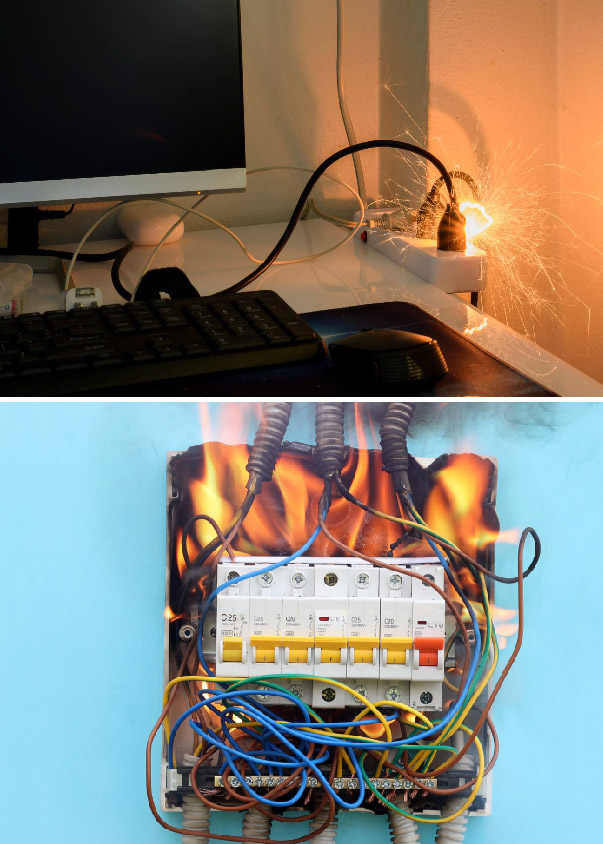
An external lightning protection system stops the building burning down. It does not stop the surge. The strike current flowing to earth couples into the building’s wiring and appears at distribution boards as a fast, high-energy transient — which is what destroys lift controllers, BMS panels, fire alarm systems, data switches and HVAC drives.
That is handled by a coordinated set of surge protection devices: Type 1 at the service entrance where the lightning current enters, Type 2 at sub-distribution boards, and Type 3 close to sensitive equipment. They only work as a coordinated chain — a Type 3 device on its own in front of an unprotected incomer is decoration. Full SPD guide here.
Inspection and maintenance
- Visual inspection of roof terminations, joints and exposed conductors at planned intervals — and after any known strike.
- Continuity testing from the air termination through to the earth termination.
- Earth resistance measurement at each test point, logged so the trend is visible rather than just the latest reading.
- Re-check bonding after every fit-out, facade job or riser alteration. New services get added to shafts constantly and are routinely left unbonded.
- Keep the as-built drawing and the commissioning readings in the building file. A system nobody can document is a system nobody can maintain.
Planning protection for a high-rise project?
The decisions that matter — natural down conductors, foundation earthing, bonding at each level — are cheap at structural design stage and expensive afterwards. If you are at drawing stage on a tower, apartment block or commercial high-rise, Ashlok manufactures the full lightning protection and earthing range in Chennai and will review your layout with you. Call +91 94440 87356 or send us the drawings.
Frequently asked questions
Do skyscrapers have lightning rods?
Yes — though on a modern tower the visible rods are only the interception points. The bulk of the system is the down-conductor network (often the building’s own steel frame), the bonding, and the foundation earthing, none of which is visible from outside.
Is lightning protection mandatory for high-rise buildings in India?
Lightning protection for tall and high-occupancy buildings is a standard requirement in Indian building and electrical practice, and local authorities routinely ask for it at approval stage. Design is normally carried out to IS/IEC 62305 with earthing to IS 3043. Confirm the exact requirement with your local authority and your electrical consultant for the specific project.
Can lightning strike the side of a tall building?
Yes, and above roughly 60 m it should be expected. That is why tall structures need air termination on the upper sides and not only on the roof — a roof-only design leaves the upper floors unprotected.
Is it safe to be inside a high-rise during a thunderstorm?
In a properly protected and bonded building, yes — that is the entire purpose of the system. Sensible precautions still apply: stay off open terraces and roofs, and avoid contact with plumbing and corded equipment during a storm.
Can an existing high-rise be retrofitted?
Yes. Air terminations, external down conductors, bonding bars, earth electrodes and SPDs can all be added to an occupied building. What generally cannot be recovered is the use of the reinforcement as a natural down conductor, since that needed continuity to be established during construction — so retrofits usually carry external conductors.
What does a high-rise lightning protection system cost?
It scales with height, footprint, protection class and whether the structure can be used as the down-conductor network. We have broken down the cost drivers for earthing and lightning protection in this guide.
Related reading
- Lightning Protection System Design: A Detailed Guide
- Lightning Arrester Design for Buildings
- Lightning Arrester for Home
- Does Lightning Always Strike the Tallest Object?
- Surge Protection Device (SPD) Guide
Related: lightning arrester design for buildings and rooftop solar and what idi thangi means and how it works.
