


 By
By Earthing electrodes are the main parts of an electrical safety system and will guarantee that fault currents will flow safely into the ground. But climate and environmental conditions where these systems are installed can greatly affect their performance. Climate is one of the most important factors which affect the long-term performance of Earthing electrodes because of the extreme weather, moisture levels and temperature variations, etc.
In this blog, we top up different climatic conditions acting on the earthing electrodes and how to increase its life span and performance.
1. Moisture Levels and Soil Conductivity
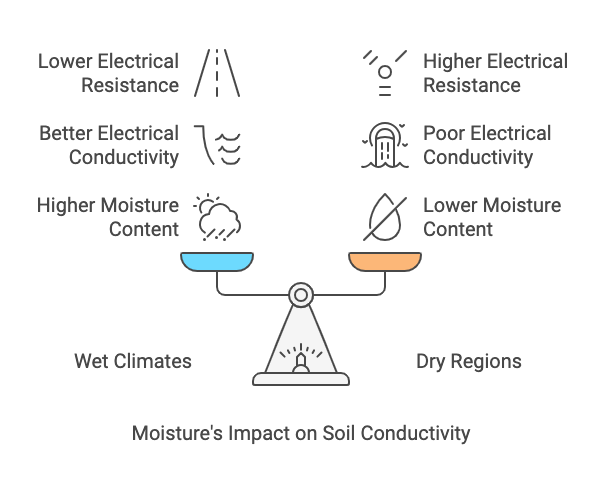
Moisture content, or the amount of water in the soil, is one of the key factors that affect the performance of an earthing electrode. Soil moisture conducts electricity very well having fault currents (roughly electrical surges which are unwanted) pass harmlessly into the ground. Unfortunately, climate changes influence soil moisture content, and soil moisture is linked to soil electrical conductivity.
- Wet Climates: The soil has higher moisture (water in the soil) content because of continuous rain or high humidity which leads to better electrical conductivity of soil. This allows the earthing system to quickly dissipate fault current (pass the electricity safely into the ground) and reduces resistance (how difficult it is for electricity to travel through the earth).
- Dry Regions: On the other hand, if there is less rainfall or during dry seasons, the soil will dry. This raises resistivity (the opposition to electrical flow through the soil) and makes the electricity harder to flow through soil. This results in the earthing system not dissipating fault currents effectively, therefore leading to high resistance and poor performance.
2. Temperature Variations
One of the important factors which affect the performance of the electrodes of earthing, is the temperature of the surroundings. This huge temperature variability may have impact on the soil and the materials of the electrode, which might cause problems.
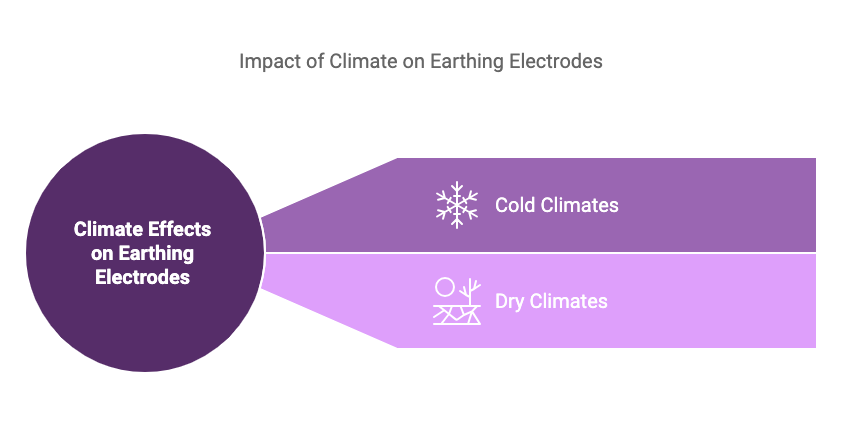
- Cold Climates: Very cold conditions can freeze the ground, therefore decreasing soil conductivity. Friction on soil which is frozen soil is a quite high resistant for electric current which eventually reduce the performance of earthing electrodes. The physical expansion and contraction of the soil from froze-thaw cycles can also impose mechanical forces on the electrodes, potentially causing physical damage.
- Dry Climates: The hot weather leads to desiccation and shrinkage of soil which reduce soil conductivity This is especially concerning in dry locations, where soil is already normally low in moisture. Heat over an extended duration can corrode metal electrodes and shorten their life.
3. Soil Composition and Weathering
The type of soil around the earthing electrodes change over a period because of weather conditions, thus affecting the entire grounding system.
- Rainfall and Flooding: Intense rains can lead to soil erosion and leaching, removing materials with conductivity and changing chemical equilibrium. This can decrease the soil resistivity that is essential for the transformation of the grounding system.
- Drought and soil shrinking: the lack of rain continued in dry areas causes soil shrinking, which leads to a gap in the electrode and the soil, affecting the current discharge efficiency. Some types of soil will be more resistive with the absence of moisture which will raise the impedance and reduce the system defecting fault currents into the ground.
4. Corrosion and Environmental Conditions
Corrosion is what happens when metal experiences gradual damage over time due to environmental factors such as moisture, air, or salt. This is a significant issue for earthing electrodes and mass in coastal areas or very humid atmospheres. Such conditions can increase the degradation of the metal electrodes, making the pen less effective and shorter in service life.
- Saltwater Exposure (Coastal Areas) In the case of coastal areas, the salt concentration in the air and the soil is very high. Salt accelerates corrosion (the break down of the metal), which deteriorates the electrode as time goes on. This implies the earthing framework will confront less execution. This is why electrodes are often coated with protective coatings or made of non-corroding materials to enhance their lifetime.
- Humidity and Rain: Electrodes are made of metal and in humid conditions (lots of water in the air) or rain it can become rusty over time. This phenomenon is termed as Electrode Corrosion by which the earthing system degrades. This problem can happen even inland if the air is extremely humid. Periodic inspections and maintenance must be performed to look for any rust or other damage and address it before a real problem arises.
5. Seasonal Changes and Ground Movement
Weather conditions changing season by season has its own impact on earthing systems. However, in places where seasons are extremely different, heat can cause soil surrounding the electrodes to swell, and cold can cause the soil to shrink. That movement presses on the electrodes leading to performance issues of the system.
- Freezing and Thawing Cycles: Sometime, when it is very cold, on the winter the soil can even freeze, then the soil then melts (thaw) when it warms up. This cycle of freeze and thaw can cause the ground to shift or crack, potentially breaking the electrode’s ground connection. The earthing system will not function properly if the electrode is not in proper contact with the soil. Sometimes this movement is so detrimental to the electrode and even the soil that repairs or replacements are required.
- Soil Settlement: Weather changes can cause soil to dry out, shrink, or even shift due to moisture or heat changes. With time, this shifting can either force the soil to push against the electrode, or create space around it. Thus, it reduces the capacity of the system in case of running the fault currents, increasing its resistance and affecting its performance.
How to Reduce the Impact of Climate on Earthing Electrodes
Effects of Climate Conditions on the Performance of Earthing Electrodes: But you can overcome climate effects and achieve everlasting reliability of the system;
Apply Corrosion-Resistant Materials: Other long-lasting materials such as copper-bonded electrodes that are rust-proof and are not damaged easily, should be used especially in places of high humidity or salty air (i.e., places like coastal areas).
Regular maintenance and inspections: check for issues such as rust, soil movement, or fluctuations in soil moisture content. Identifying these issues early on helps keep further failures at bay.
Add Backfill Compounds: Fill the soil with Zetalite™, Conductolite™, or Humdite™ to increase electrical conductivity or moisture retention. These compounds are particularly useful in arid or stony regions.
Temperature-Resistant Design:Use electrodes that are capable of withstanding the extreme weather, freezing winters, or summer to avoid damage by the temperature changes.
Proper System Design: Use longer electrodes or add conductive layers in case the soil is eroded/shifting in the future.
Ashlok’s Advanced Earthing Solutions: Built to Conquer Any Climate
Many factors such as moisture content, temperature variations, soil characteristics, and corrosion susceptibility have a huge influence on the performance of earthing electrodes. We at Ashlok, offer solutions for withstanding these issues. Zetalite™, Conductolite™, Humdite™, copper-bonded electrodes and other advanced products are specifically designed to increase conductivity, minimize corrosion, and operate from pole to pole in any climate.
Keep Electrical Safety and Performance for Longer with Ashlok’s Innovative Earthing Solutions which are also Unaffected by Environmental Elements. Whether it is a deployment of one of our grounding systems or all of them, you can trust Ashlok to deliver.
